Choosing the right school bag is one of the most important decisions parents make before a new school term begins. A school bag is more than just a backpack—it carries books, stationery, lunch, and personal belongings every day. A good-quality bag not only protects your child’s learning materials but also supports their comfort and posture throughout the school year.
With so many designs, sizes, and brands available, finding the perfect school bag can seem challenging. This guide highlights the key features to consider when shopping for a primary school backpack and explains why investing in a durable, well-designed bag is worth it.
Why the Right School Bag Matters
Primary school children carry their bags almost every day. A poorly designed or oversized backpack can cause discomfort, make it difficult to organize school supplies, and wear out quickly.
A quality school bag helps by:
- Protecting books and stationery from damage
- Making it easier to organize school items
- Reducing strain on the child’s shoulders and back
- Lasting longer, saving money in the long run
- Giving children confidence as they head to school
Choosing the right bag is an investment in your child’s comfort and learning experience.
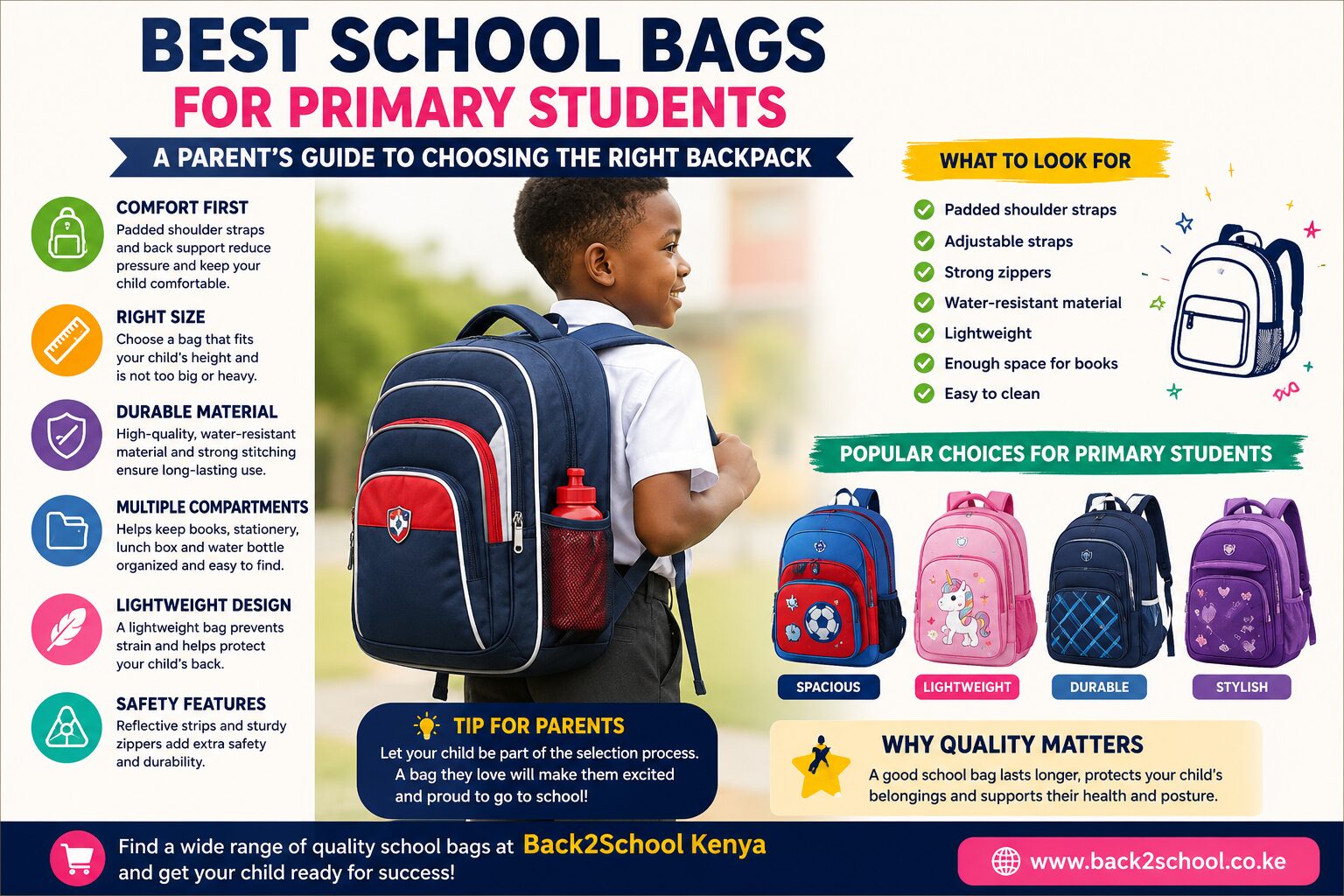
1. Choose the Right Size
One of the biggest mistakes parents make is buying a bag that is either too large or too small.
A bag should comfortably fit your child’s height and body size without hanging too low or extending beyond the waist. Oversized bags encourage children to carry unnecessary weight, while very small bags may not fit exercise books and learning materials properly.
Before purchasing, consider:
- Your child’s age
- The number of books they carry daily
- School requirements
- Whether they carry a lunch box and water bottle
Selecting the appropriate size ensures the backpack is practical without being bulky.
2. Look for Comfortable Shoulder Straps
Comfort should always be a priority.
The best school bags have:
- Wide padded shoulder straps
- Adjustable straps
- Soft cushioning to reduce pressure
Thin straps can dig into a child’s shoulders, especially when the bag is full. Adjustable straps allow the backpack to fit properly as your child grows.
Children should wear both shoulder straps instead of carrying the bag on one shoulder, as this helps distribute weight evenly.
3. Durable Materials Make a Difference
Primary school students use their bags every day, often placing them on classroom floors, playgrounds, or buses. For this reason, durability is essential.
Choose school bags made from:
- Strong polyester
- Nylon
- Canvas
- Water-resistant fabrics
These materials resist tearing, withstand daily wear, and help protect books from rain and accidental spills.
Strong stitching and reinforced handles are also signs of a quality backpack.
4. Multiple Compartments Keep Everything Organized
Organization is just as important as durability.
A well-designed school bag should include:
- A large main compartment for books
- A smaller pocket for stationery
- Side pockets for water bottles
- A front compartment for lunch boxes or personal items
Multiple compartments prevent books from getting damaged and make it easier for children to find what they need quickly.
Teaching children to organize their bags also encourages responsibility and independence.
5. Strong Zippers and Fasteners
A backpack is only as reliable as its zippers.
Look for:
- Smooth, heavy-duty zippers
- Reinforced zipper stitching
- Easy-to-grip zipper pulls
Cheap zippers often break after only a few weeks of use, forcing parents to replace the entire bag.
Testing the zippers before buying can save future frustration.
6. Lightweight Design
A school bag should not be heavy before books are added.
Lightweight backpacks reduce the total weight children carry each day, helping to prevent fatigue and discomfort.
Avoid bags with unnecessary decorations or heavy accessories that increase weight without adding value.
7. Easy to Clean
Children are naturally active, and school bags often get dirty.
Choose a backpack that:
- Wipes clean easily
- Is washable
- Dries quickly
- Resists stains
This helps keep the bag looking neat throughout the school year.
8. Attractive but Practical Designs
Many children enjoy colourful backpacks featuring their favourite characters or patterns. While appearance is important, practicality should come first.
When selecting a design:
- Let your child choose from a range of quality options.
- Ensure the bag meets the school’s size requirements.
- Avoid overly decorative bags that add unnecessary weight or reduce durability.
A bag that combines style with functionality is likely to be used proudly every day.
Caring for Your Child’s School Bag
A little care can extend the life of a school bag.
Here are a few simple tips:
- Empty the bag every weekend and remove unnecessary items.
- Clean the inside regularly to prevent dirt buildup.
- Avoid overloading the bag with unnecessary books.
- Repair loose stitching before it becomes a bigger problem.
- Store the backpack in a dry place when not in use.
Proper care helps maintain the bag’s appearance and durability throughout the school year.
Find Quality School Bags at Back2School Kenya
At Back2School Kenya, we understand that every child deserves a comfortable, durable, and reliable school bag. That’s why we stock a variety of backpacks designed for preschool, primary, and secondary school learners.
Whether you’re looking for a lightweight backpack for a young learner or a spacious school bag for upper primary students, you’ll find quality options that combine durability, comfort, and style.
Browse our collection today at https://www.back2school.co.ke and choose a school bag that will support your child’s learning journey throughout the year.